
St. Louis County Daily Arrests
The official St. Louis County Inmate Locator includes an Active Inmates filter. It shows everyone in county custody at the moment of a search. For a daily arrests check, nothing closer exists. Even so, this is not a 24-hour feed. St. Louis County lists no refresh clock, posting schedule, or maximum lag for the data. The portal itself only says the data changes fast and is updated periodically.
An active roster answers one plain question. It shows who is held now. It cannot list every booking inside a strict midnight-to-midnight window, because an earlier arrest stays listed and a fast release may never show. A citation may never reach county intake either.
Check St. Louis County Arrests
Justice Services runs the county jail. It sits at the Buzz Westfall Justice Center. The Sheriff Department only supports the courts and posts no arrest roster, so work through this official-first sequence:
- Open the county locator and select Active Inmates.
- Enter the last and first name, or try the permitted blank-name list.
- Open a likely match and compare year of birth, facility, arrest time, and case details.
- Read the charge, status, next court date, and any bond note together.
- If no match appears, contact Justice Services at 314-615-5245 or JSocial@stlouiscountymo.gov.
Justice Services sits at 100 South Central Avenue, Clayton, MO 63105. Need the police incident rather than the booking? St. Louis County Police Central Records is at 7900 Forsyth Boulevard, Room B-013, Clayton, at 314-615-5317. A city department may hold it instead. The Weekly Arrest Log explains the county's separate 72-hour release view. That filter can surface someone who has already left St. Louis County custody. It is not a week-long archive, though.
St. Louis County Arrest Fields
A person-level result can carry the fields below. Portals change, and not every profile shows every field, so read them as parts of one shifting custody record.
| Observed field | Meaning |
|---|---|
| Name and year of birth | Identity clues for separating similar names. |
| Facility | The county custody location displayed when checked. |
| Arrest date and time | The displayed arrest or custody event, not always first police contact. |
| Release date and time | A release marker when one exists. |
| Charge and status | A booking-stage charge and displayed status, not a judgment. |
| Case number and court date | Details for following the matter through the proper court. |
| Bond information | The displayed detail or direction to ask the court. |
| Photo state | An image or an “Inmate Photo Not Available” notice. |
County intake materials describe the booking routine. New arrestees are checked, fingerprinted, and photographed. The internal IRIS workflow means a booking photo can exist even when the public locator shows none, and an unofficial copy should never stand in for it.
Why County Arrests May Lag
A booking is a process. County materials describe wanted and record checks, fingerprints, and photographs before anything goes public. Staff build the operational record first. Only a changing subset of it reaches the St. Louis County locator, and no source says how long that takes, so a precise estimate would be false.
Other gaps have simpler causes. A person may have been cited, held by a city, moved, or released before the search. Juvenile and sealed matters stay private. Search again, then ask the arresting agency which custodian holds the record. The Missouri Highway Patrol search is no countywide substitute, covering only MSHP arrests and holding preliminary reports for five days.
Confirm a St. Louis County Arrest
Start with the spelling and the arresting agency when the live view shows no match. Justice Services answers for county custody. The arresting department keeps its report. County Police Central Records covers county police records. Florissant, Chesterfield, and Clayton each keep their own. A written request works best with the name, year of birth, arrest date, arresting agency, booking or case number, and the exact record sought.
Missouri Sunshine Law allows lawful copy, research, and staff costs. Ask for an estimate. Open investigations, juvenile matters, seals, and redactions can limit release. If denied, ask why and whether part can be released. The official St. Louis County records-request portal is the formal fallback when the live arrest view cannot answer the question.
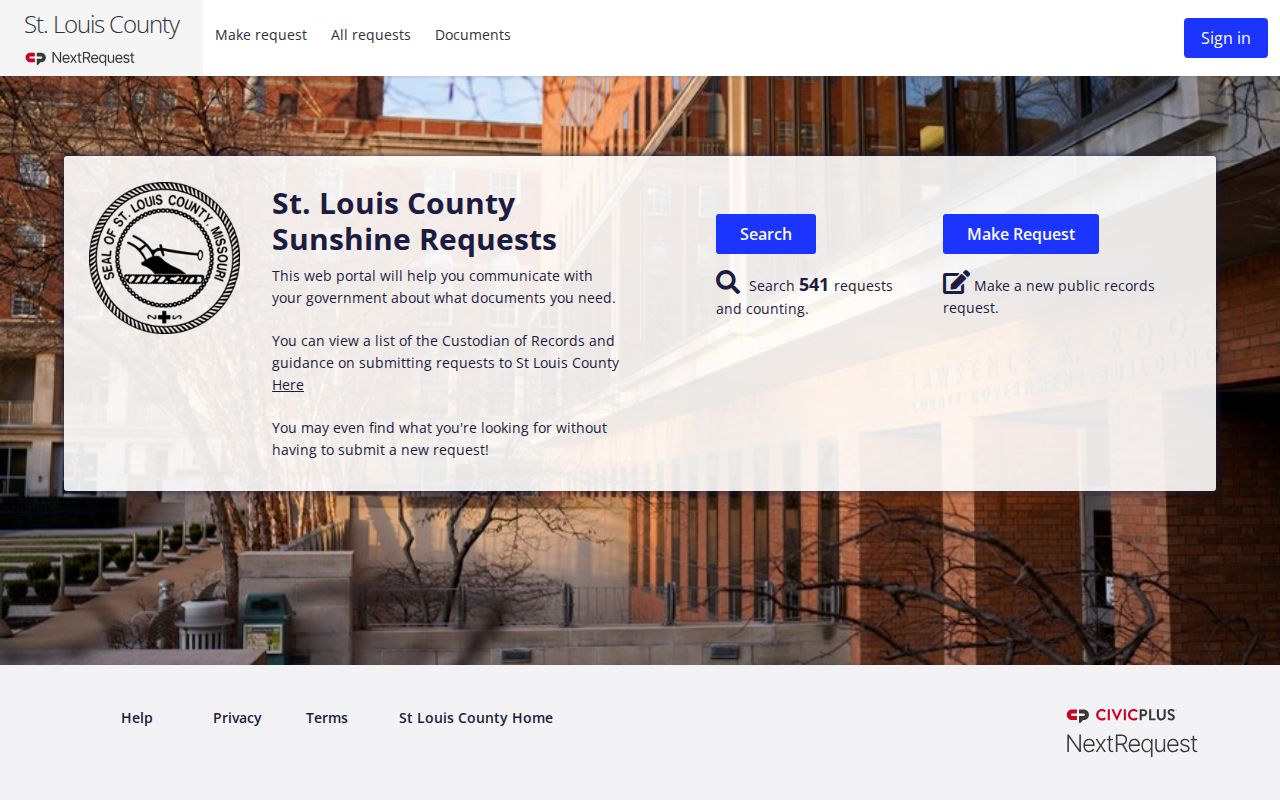
The county's official portal handles record requests only, not a browsable roster of who was arrested in St. Louis County.
The county's official Track Your Case page routes to VINE and Missouri courts.
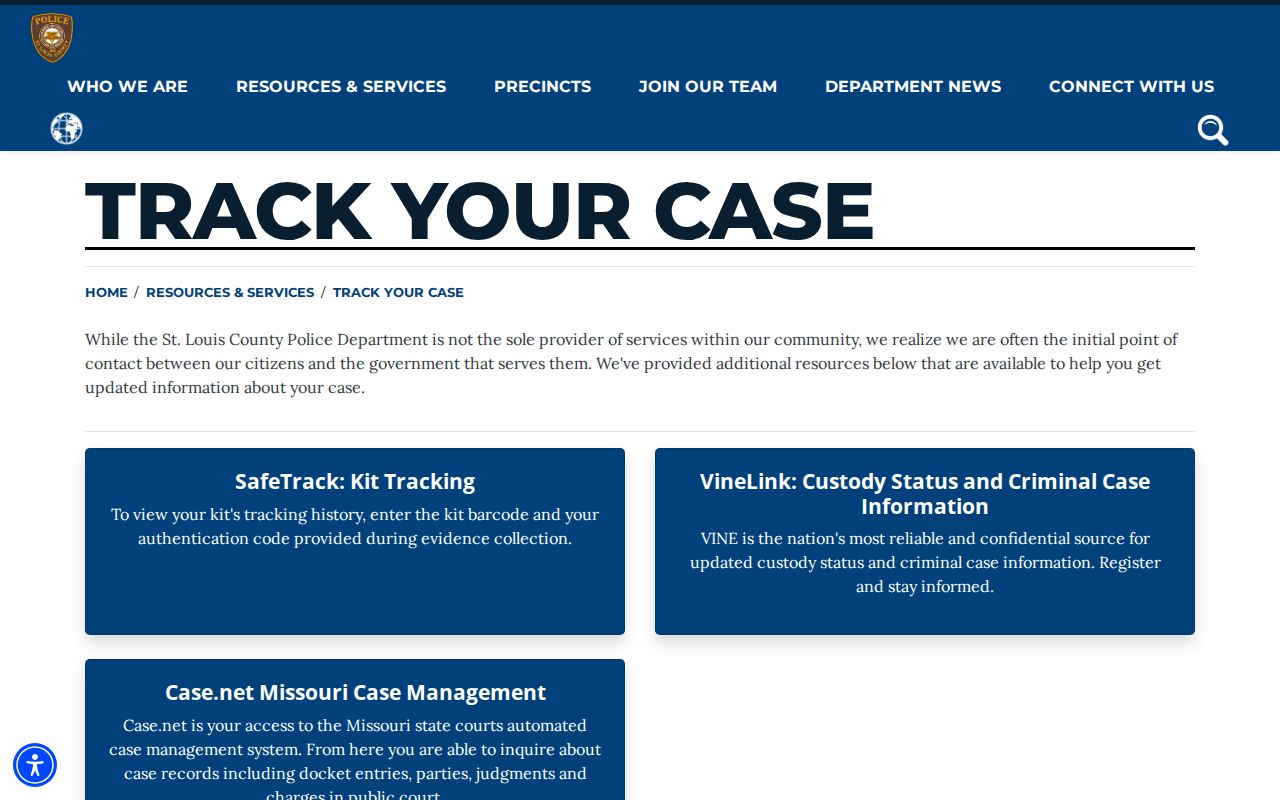
This official screen moves a same-day arrest question toward status and court checks. Case.net or municipal court holds the disposition. That means the final outcome. The Missouri DOC search serves prison, probation, and parole, not county bookings. Federal custody runs on separate systems, and the VINELink Inmate Check handles one person's custody alerts.
After a St. Louis Booking
A St. Louis County booking creates a paper trail. The locator only marks the start of it. The arresting agency keeps its own incident report. The court adds its file later. Charges come first at arraignment, the first formal hearing where a judge sets the next steps. Release usually hinges on bond, a condition the court sets. The final ruling closes the case file. The online roster never tells that whole story.
Each record moves on its own clock. A case number can appear before other court papers are posted where the public can reach them. Someone released from custody drops off the active roster fast. The court case keeps going anyway. If the person later lands in Missouri DOC custody or supervision, the DOC offender search is the right status tool. No later source turns the daily roster into a full arrest history.
Handle dates with care. The portal's arrest time may reflect the recorded custody event, not the officer's first contact. A next court date can shift. Bond details may point you to the court rather than show a dollar figure. When two official sources disagree, write down when you checked each one and ask the records custodian to sort it out. The newest-looking page is not always the controlling record.
Public access has hard limits too. Missouri law can shield juvenile peace-officer records, active investigative files, and sealed or expunged records. A redacted record simply has protected parts removed before release. An empty search result could mean any of those limits, plain lag, or a custody event outside the county system. You cannot tell the cause from a blank screen.
Public Record Search
Sponsored Results